What GSM Can 24s/1 and 38s/1 Cotton-Hemp Yarn Produce?
Short answer
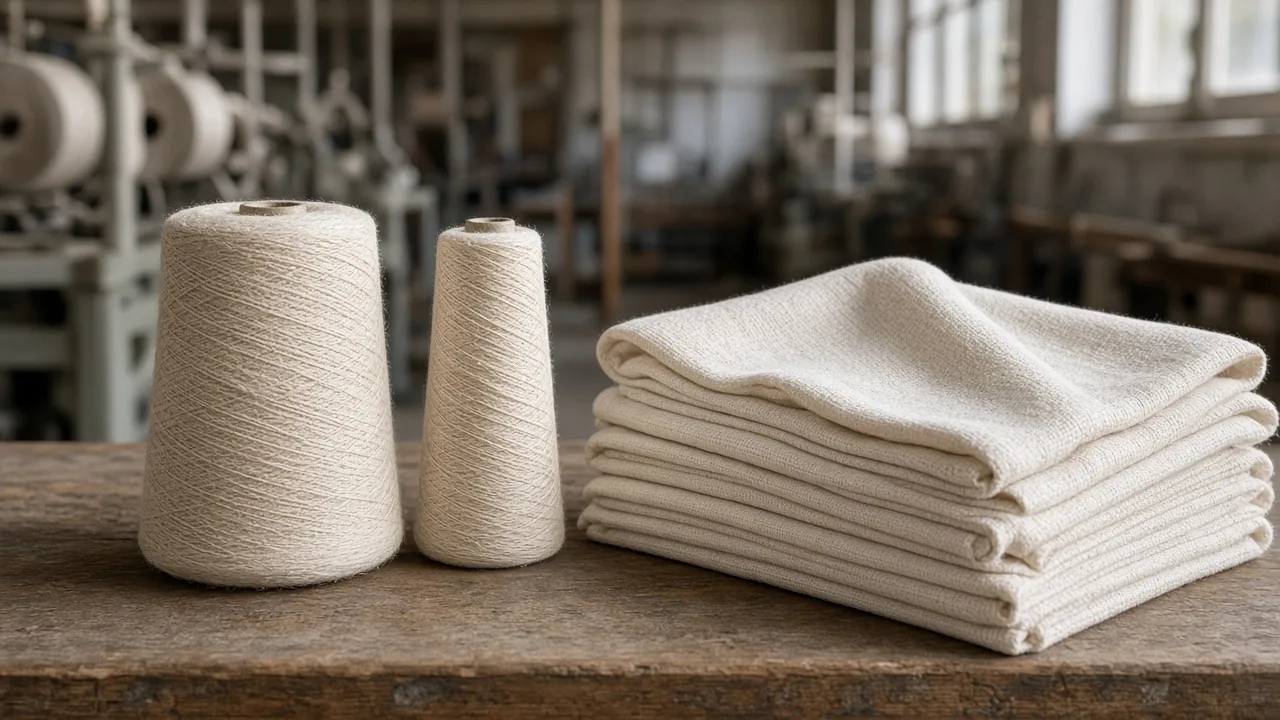
24s/1 cotton-hemp yarn commonly produces ~140–200 gsm single jersey and mid-weight plain/twill wovens. 38s/1 commonly produces ~110–160 gsm fine jersey, interlock, and sheeting constructions. Exact fabric weight always follows sett (EPI/PPI or gauge) + weave/knit + finish, not the cone alone — but these two singles are the counts home-textile and soft-apparel programs ask for most after the hemp-cotton blend guide.
Yarn and fabric: imperiumfiber.com · Imperium Yarn · Imperium Fabric.
What 24s/1 and 38s/1 mean
Both are English cotton count (Ne) singles — the same language cotton mills already buy.
- 24s/1 — one strand spun to Ne 24. Mid-fine. More mass per meter than 38s.
- 38s/1 — one strand spun to Ne 38. Fine. The sheeting / next-to-skin apparel count.
Linear density (standard conversions, not proprietary):
| Yarn | Resultant Ne | tex (g/1000 m) | Denier (approx.) |
| 24s/1 | 24 | ~24.6 | ~221 |
| 38s/1 | 38 | ~15.5 | ~140 |
(Ne → tex ≈ 590.5 ÷ Ne; tex → denier ≈ × 9.)
Blend context: Heartland cotton-hemp programs typically run 20–40% Imperium hemp — same band as Can US-grown hemp be spun with Supima® cotton?. Both fibers are cellulose, so dyeing stays on a reactive / cellulosic route.
Typical GSM ranges by construction
These are mill starting bands, not guarantees. Sample against your incumbent SKU.
Knits
| Yarn | Construction | Typical finished GSM | Where it shows up |
| 24s/1 | Single jersey | 140–180 | Tees, lounge tops, lighter sweat |
| 24s/1 | Interlock / 1×1 rib | 170–200 | Lounge bottoms, structured tees |
| 38s/1 | Single jersey | 110–140 | Fine tees, base layers, soft apparel |
| 38s/1 | Interlock | 140–160 | Smooth face lounge, light bedding knits |
Wovens (plain / percale-adjacent / light twill)
| Yarn | Sett character | Typical finished GSM | Where it shows up |
| 24s/1 | Moderate EPI/PPI | 140–180 | Casual shirting, mid sheeting, pillow shells |
| 24s/1 | Open utility sett | 120–150 | Lightweight home textiles |
| 38s/1 | Higher EPI/PPI | 110–150 | Fine sheeting, pillowcases, shirting |
| 38s/1 | 120–200 TC sheeting | 110–145 | Hotel/residential bed linen programs |
For thread-count math and bed-linen construction specifically: Can cotton-hemp yarn make 120–200 TC bed linen?.
How GSM is set (so quotes are honest)
Fabric weight is not "the yarn's GSM." Three levers move the number:
- Count — 24s carries more mass per length than 38s at the same sett.
- Sett / gauge — more ends and picks (or tighter knit gauge) raise gsm.
- Finish — singeing, calendering, enzyme wash, and residual moisture shift finished weight a few percent.
A useful mental model for plain weave:
Heavier yarn × denser sett → higher gsm. Finer yarn × denser sett can still hit mid gsm if you pack the cloth — which is how 38s lands in the 120–200 TC sheeting band without feeling like canvas.
Activewear programs that need finer hemp-lyocell counts (not cotton-hemp) should start at 40/1 and 40/2 hemp-lyocell yarn — those cones target 110–220 gsm performance knits on a different blend.
Which count to spec
| If the brief is… | Start with | Why |
| Soft mid-weight tee / lounge | 24s/1 | Opacity and hand without heavy interlock |
| Fine jersey / next-to-skin soft apparel | 38s/1 | Lower mass, smoother face |
| 120–160 TC sheeting | 24s/1 or 38s/1 | 24s for substance; 38s for finer face |
| 180–200 TC sheeting | 38s/1 | Fine singles pack into higher TC cleanly |
| Shirting with crisp structure | 24s/1 | Mid count holds a collar/placket story |
When the cotton side is ELS / Supima®, keep hemp at 20–30% for maximum cotton face; raise toward 35–40% when wash life and dryness matter more than maximum cotton hand.
Sibling doors
| Intent | Page |
| Hemp + Supima® / ELS cotton | Can US-grown hemp be spun with Supima® cotton? |
| Bed linen thread count | 120–200 TC cotton-hemp bed linen |
| Full hemp-cotton guide | Hemp-cotton blends guide |
| Fine hemp-lyocell activewear counts | 40/1 & 40/2 hemp-lyocell |
| Supply path | USA → India → USA |
| Product | imperiumfiber.com |
How to lock a gsm target
- Bring the incumbent fabric weight — "160 gsm cotton jersey" or "200 TC / 125 gsm percale" is enough to quote.
- Pick 24s/1 or 38s/1 from the tables above.
- Confirm blend — 20–40% Imperium hemp.
- Sample knit/weave + finish — measure finished gsm after wash, not grey cloth alone.
- Order — imperiumfiber.com · contact.
Bottom line
24s/1 is the mid-weight cotton-hemp workhorse (~140–200 gsm). 38s/1 is the fine-face count (~110–160 gsm) that carries sheeting and soft apparel. Spec the construction, not a magic gsm on the cone — then sample. That is how mill programs close.
Library: hemp-cotton blends · Supima® + hemp · 120–200 TC bed linen · sustainability news.
Quick answers