Benefits of Wellness Fabric for Home Goods
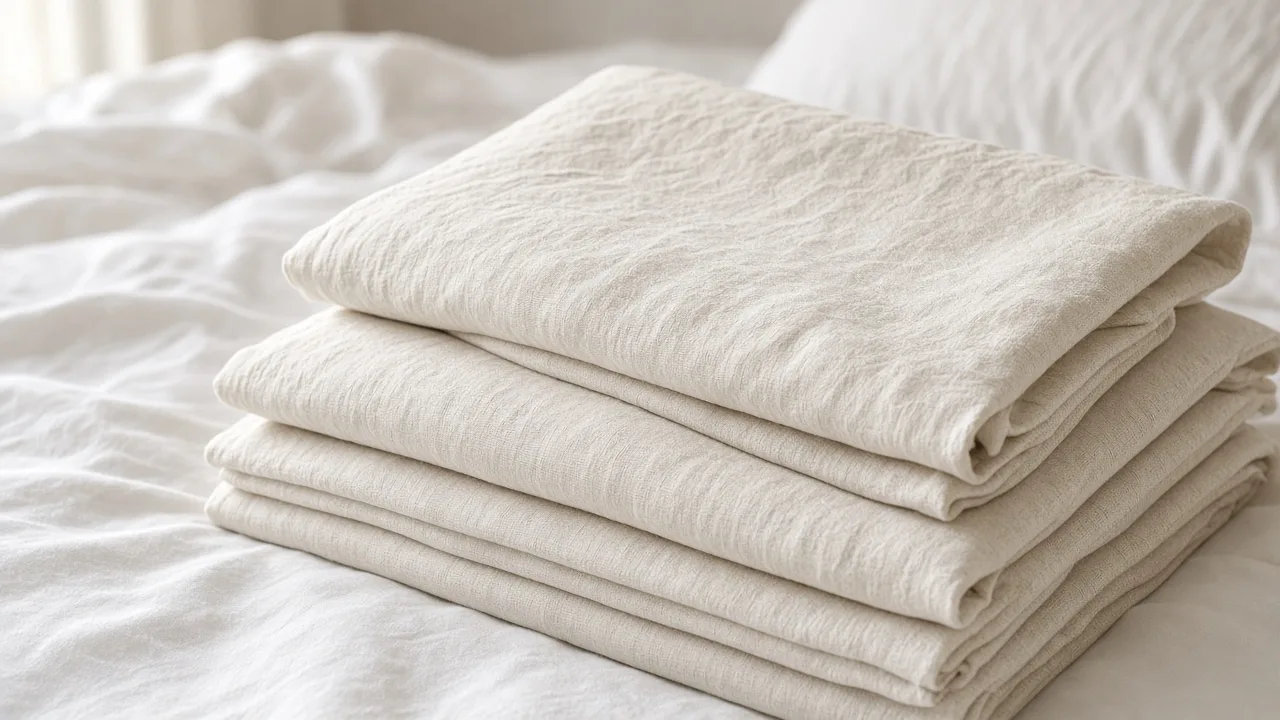
What sits on skin for eight hours
Home goods are the long contact: sheets, pillowcases, towels. Wellness fabric here is US-grown hemp spun with Supima cotton, the home line in What Is Wellness Fabric?. The mill brief is Wellness Fabric for Home Textiles.
This is not the activewear cone. Home programs run 24s/1, 38s/1, and 40s/1 hemp-Supima. The weave note for sheeting is 120–200 thread count cotton-hemp and the GSM sheet for 24s and 38s. The blend page is the hemp-cotton guide. Supima specifically is Can US-grown hemp be spun with Supima?.
Performance
Drop-in on cotton looms. Mills that weave percale and toweling already have the frames. Hemp adds tensile strength. Supima keeps the hand and the length mills sell on a fine sheet. You are not installing a hemp line.
The feel people mean by "sleeping better" starts as moisture and temperature. A polyester sheet films. A bast or cotton sheet moves vapor. That is also why plant-fiber cloth does not throw the static polyester does — the static mechanism.
What sleep studies actually measured
Do not claim a hemp sheet has a polysomnography trial behind it. It does not.
What does exist:
- University of Sydney researchers (Shin, Chow, and colleagues) ran polysomnography on sleepwear and bedding. Wool sleepwear shortened sleep onset versus cotton, especially at 17°C. Polyester was the bedding comparison in that design. A later warm-room study (30°C) in adults 50–70 found wool sleepwear cut sleep-onset time versus polyester and cotton for older sleepers, and lowered fragmentation versus polyester. Neither cotton nor polyester beat wool across the sleep measures they tracked.
- A 2024 systematic review of fiber and sleep, covering nine human trials, found the picture is fiber-specific and temperature-specific. Wool sleepwear helped sleep onset. Linen bedsheets improved sleep quality in warm rooms in young adults. The review's table labels that linen set as linen (hemp). The nap numbers and the limits are can natural fiber bed sheets improve your sleep and health.
Use those papers as the reason fiber choice shows up in sleep. Do not paste them onto a hangtag as "clinically proven hemp." The product you can spec today is hemp-Supima sheeting and toweling.
Microplastics from the linen closet
Polyester sheets, duvet fills, and curtains are on the source list. The EPA names clothing and, in the 2024 microfiber report with NOAA, blankets and bedding among the textiles that shed. The cumulative apparel-wash figure they cite from Gavigan is 5.6 million metric tons of synthetic microfiber from 1950 to 2016.
Nature Communications (2024) estimates synthetic-textile laundry at 4% to 35% of primary microplastic emissions to water. A sheet is a large area of filament. If the face is polyester, the wash is a plastic emission. Hemp-Supima has no polyester filament in the cloth. Lint is plant fiber.
Pesticides
A cotton sheet is an acre. USDA NASS, crop year 2025: herbicides on 88% of planted cotton acres, insecticides on 39%, glyphosate isopropylamine salt on 55%. That is the conventional cotton baseline.
The hemp in the blend is Heartland's contracted US acre — Engineering Earth — grown with no pesticides and far less water than cotton. It is not a claim that every Supima bale is organic. It is a claim about the hemp. Seed, harvest, and buyers: hfga.io.
Leave the filler LCA on plastics. A sheet is outside that boundary.
Hormones
Eight hours of skin contact is a different dose than a gym hour. The 2025 review of plastics as endocrine disruptors describes phthalates, bisphenols, and related additives that can mimic hormones. Textile chemistry reviews find those additives, and PFAS, on synthetic home fabrics as well as apparel.
Wellness sheeting is not hormone therapy. It is a plant-fiber cloth that does not start as that polymer. Sleep benefits in the lab are about temperature and onset, reported above, not about a hormone panel.
Cost
Fine cotton-system counts, woven where mills already weave cotton. No new plant. Spec at imperiumfiber.com. Journal: Learn. Company: Imperium Fabric and Imperium Fibers.
The same benefit question for kits that move is activewear and swimwear.
Quick answers